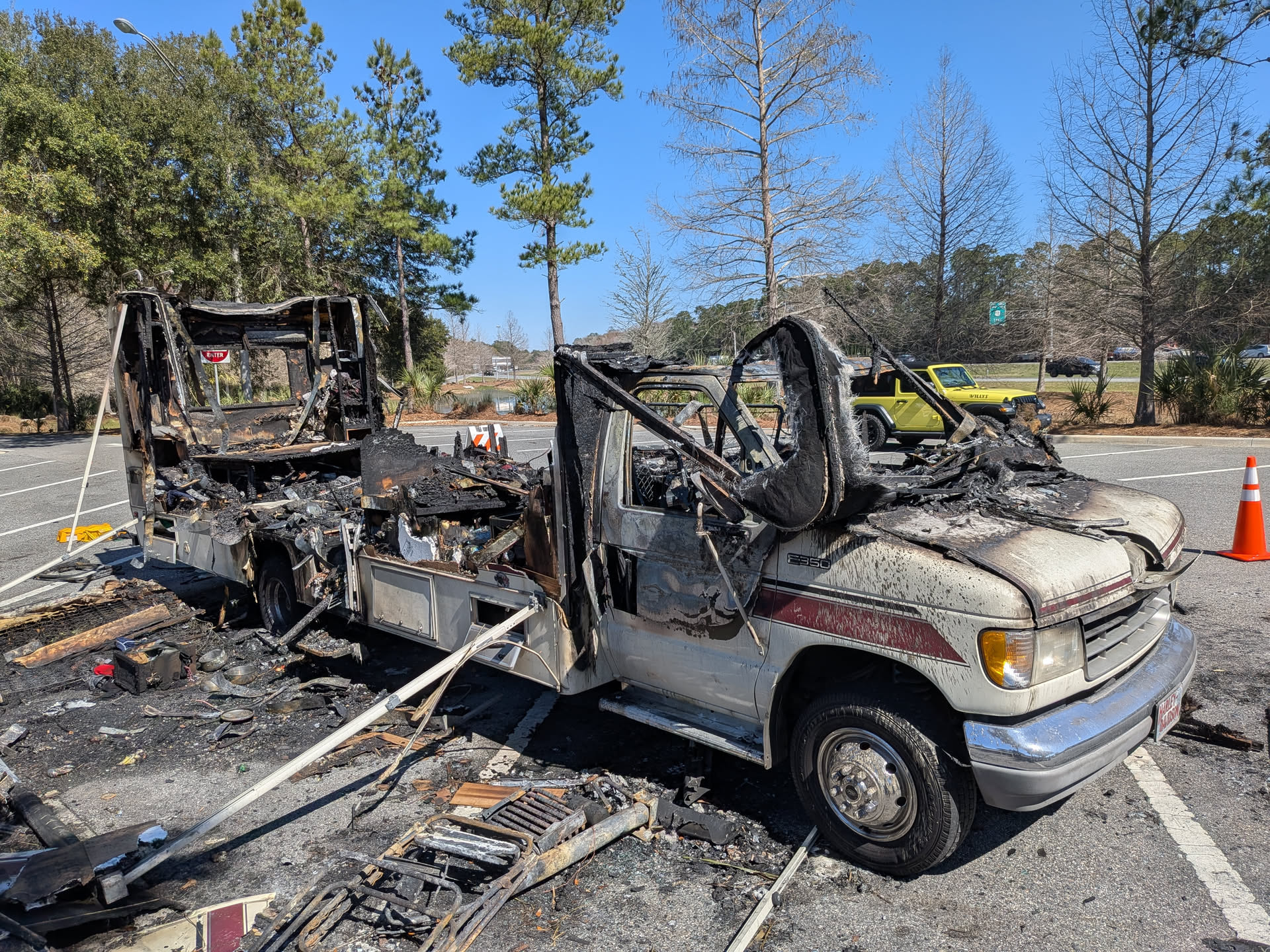
This is at the Florida welcome center. I’m joking with this lady. “I think that awning is going to need a repair”, and it turns out it was her RV. She gave me the whole story. It was 2:00 a.m. last night, they had woken up from sleeping when they heard the generator kick on all by itself. Her husband opened the access panel, to find fire erupting behind the generator. They couldn’t get the fire extinguisher to work, grabbed a couple things jumped out, and in 10 minutes it was entirely ablaze. Fortunately the Jeep they were towing, was undamaged, although initially they couldn’t find the key fob. A firemen found a melted key fob, and surprisingly when they put it in it worked.
Message to self: Know your fire extinguishers, and have duplicates.
A **common fire extinguisher** (typically an **ABC dry chemical** type found in homes, offices, and vehicles) is safe and effective for these three main types of fires:
- **Class A**: Ordinary combustibles like **wood**, **paper**, **cloth**, trash, or most plastics.
- **Class B**: Flammable liquids/gases like **gasoline**, **oil**, **grease**, solvents, or paints.
- **Class C**: Energized **electrical** equipment (e.g., appliances, wiring, outlets—non-conductive agent prevents shock risk).
**Do NOT use it on**:
- **Class D** (burning combustible metals like magnesium or sodium) — requires special extinguishers.
- **Class K** (kitchen cooking oils/fats in deep fryers) — needs a wet chemical extinguisher.
Always check the label on your specific extinguisher for its exact ratings, and remember: only fight small, contained fires if safe—otherwise evacuate and call emergency services.